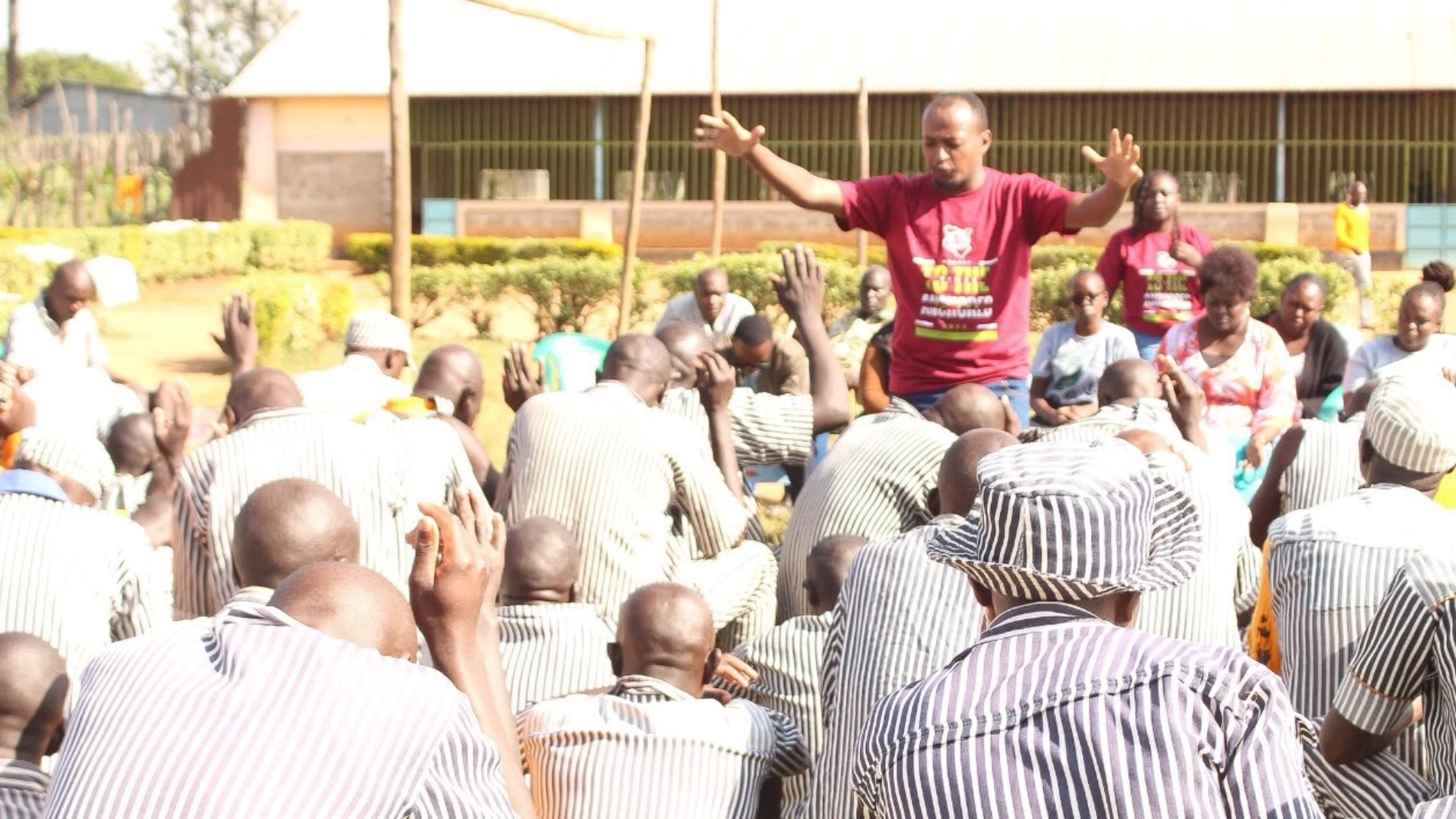
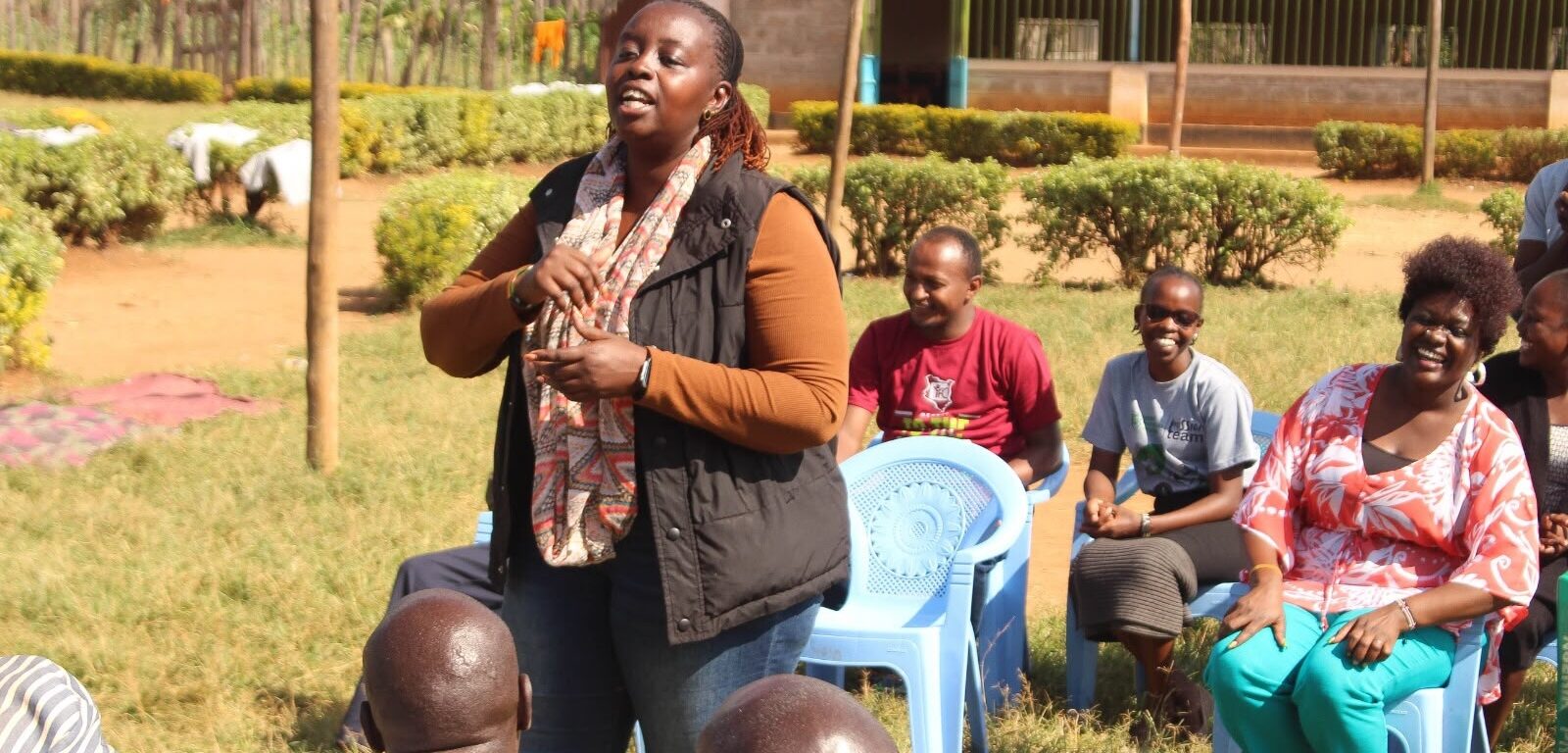
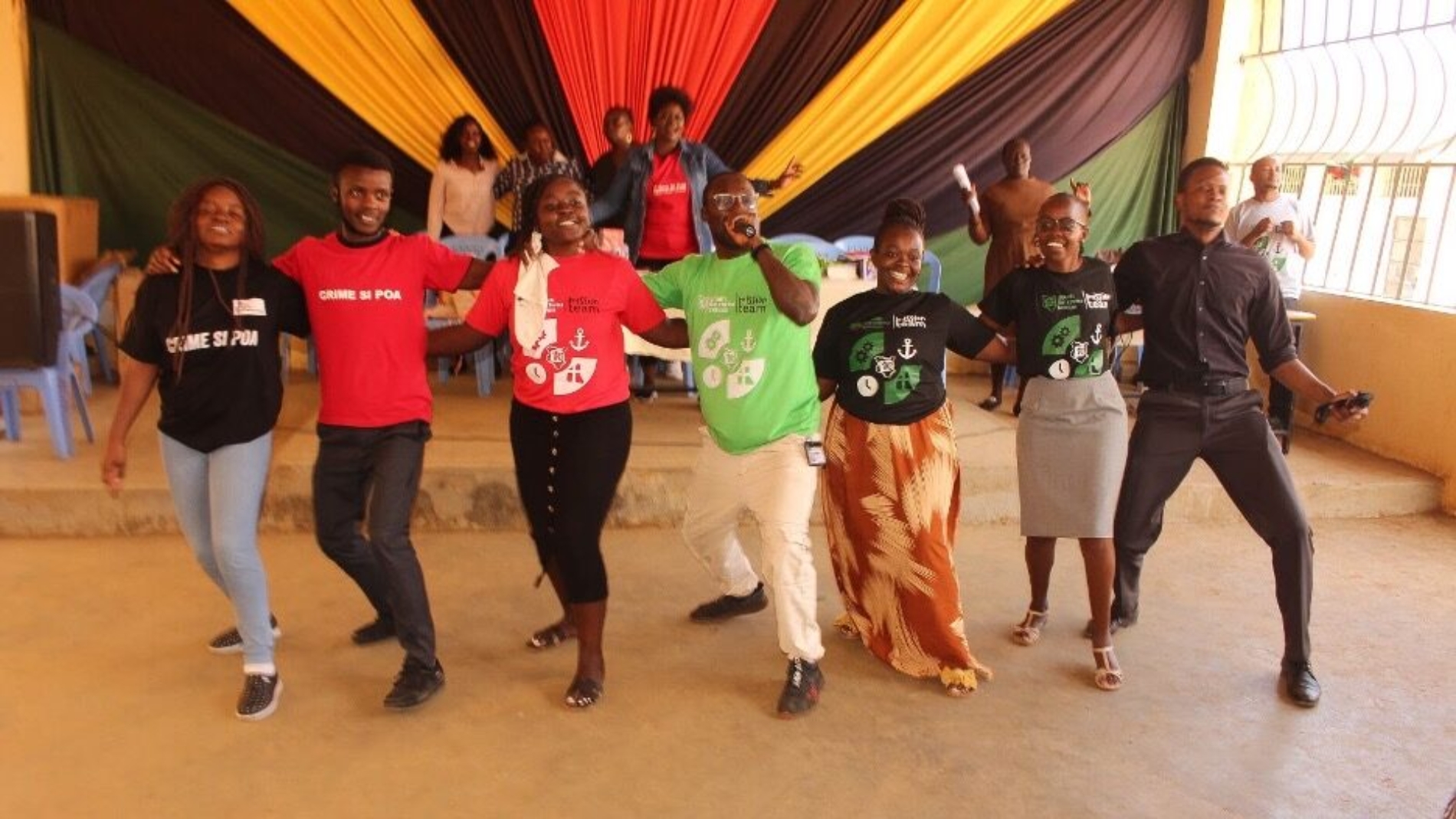
On July 14, 2026, the quiet routine inside Ngeria Farm Prison gave way to a powerful shift in energy. What began as music echoing through the facility turned into an afternoon defined by candid conversation, shared learning, and genuine personal breakthroughs.
The Crime Si Poa Eldoret team joined forces with Kenya Youth for Christ to conduct a targeted mentorship outreach at Ngeria Farm Prison. Behind prison walls, individuals often struggle with the stigma of incarceration and feel defined solely by their past mistakes. This joint initiative was designed to challenge that narrative, equipping inmates with the mindset and tools needed for successful rehabilitation and community reintegration.
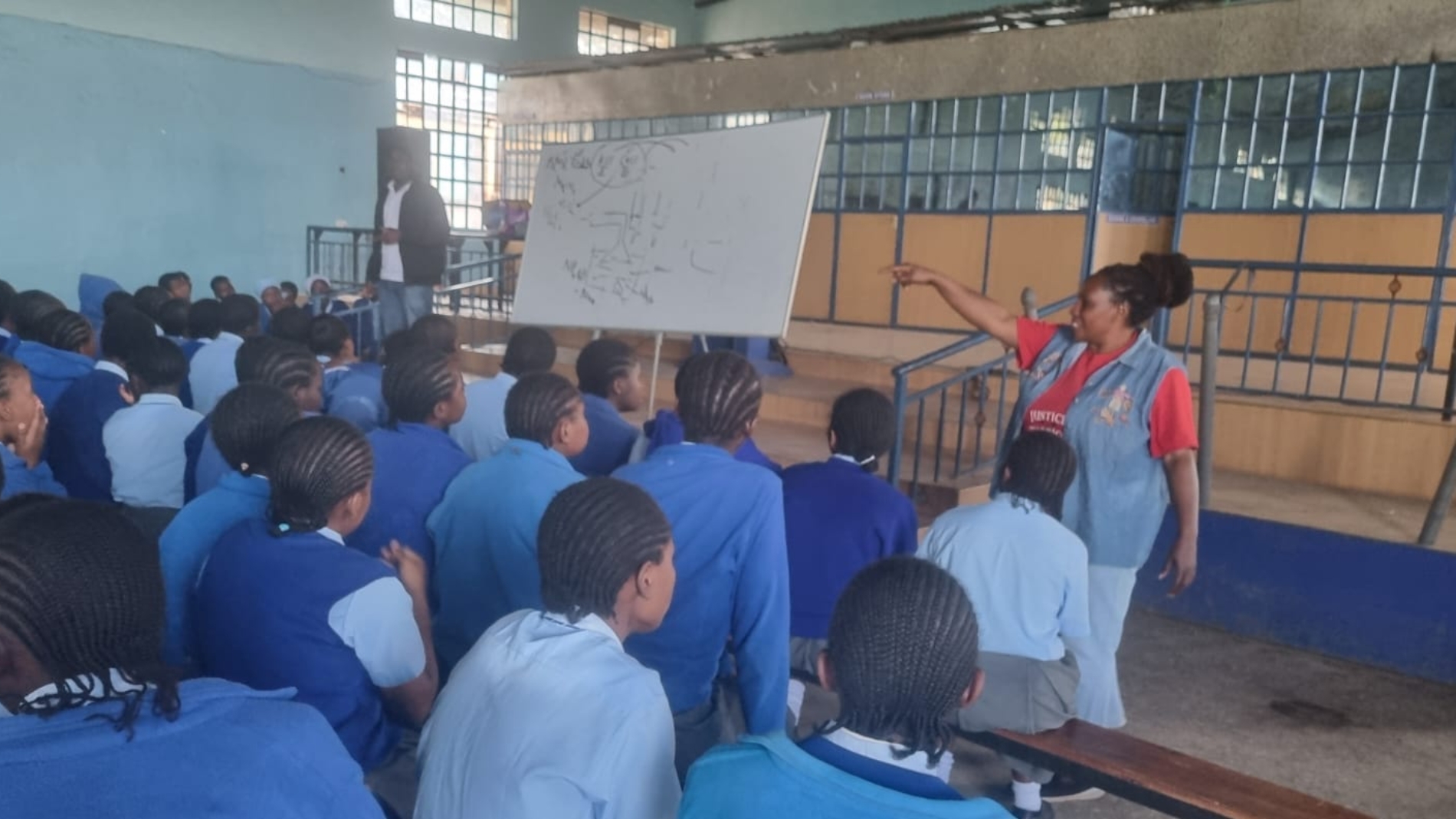
A facilitator shares practical life skills and mentorship with inmates at Ngeria Farm Prison.
The session opened with icebreakers and interactive activities to build trust and create an open space for dialogue. As the atmosphere warmed up, the facilitators transitioned into core mentorship modules, addressing critical issues surrounding personal responsibility, emotional discipline, decision-making, and avoiding recidivism. By pairing practical life-skills training with values-based guidance, the session tackled the real challenges inmates face both during incarceration and upon release.
A central element of Crime Si Poa’s approach to crime prevention is addressing root causes, including mindset and personal character. Working alongside Kenya Youth for Christ allowed the outreach to address the whole person, integrating ethical grounding and spiritual reflection into practical behavioral reform. The message delivered to the men was clear: a past conviction is a single chapter, not the end of their story, and positive change is entirely within reach.
Recognizing that long-term rehabilitation requires continuous reinforcement, Crime Si Poa and Kenya Youth for Christ donated a fresh collection of educational, developmental, and inspirational books to the prison library. This resource library provides inmates with materials to lead self-guided study groups, practice peer mentorship, and maintain the momentum generated during the visit.
By combining the expertise in crime prevention and behavioral change with partner-led mentorship, the outreach went far beyond a standard prison visit. It reinforced the power of collaborative intervention in transforming lives, proving that with the right support, correctional facilities can become places of genuine growth, accountability, and second chances.
Rebuilding a life after prison requires more than just good intentions. It takes real economic tools and a solid plan for the future. On July 15, 2026, Crime Si Poa partnered with Cooperative Bank’s Eldoret branch and Kenya Youth for Christ to host a specialized outreach at Eldoret Women’s Prison, focusing on financial literacy, inner strength, and practical steps toward self-reliance. The day opened with warm, interactive icebreakers and music to set a comfortable tone, creating an open atmosphere where the residents felt seen, respected, and ready to participate fully in the sessions.
A central focus of the visit was addressing the economic realities women face upon release, a critical factor in preventing reoffending. Facilitators from Cooperative Bank led a practical, step-by-step session on basic financial management, teaching the women how to budget, manage small resources while in custody, and begin building micro-savings. The bankers emphasized that cultivating a habit of saving even with modest amounts provides an essential financial safety net when transitioning back into the community, giving them the standing start needed to launch small business ventures or secure basic necessities without falling into financial desperation.
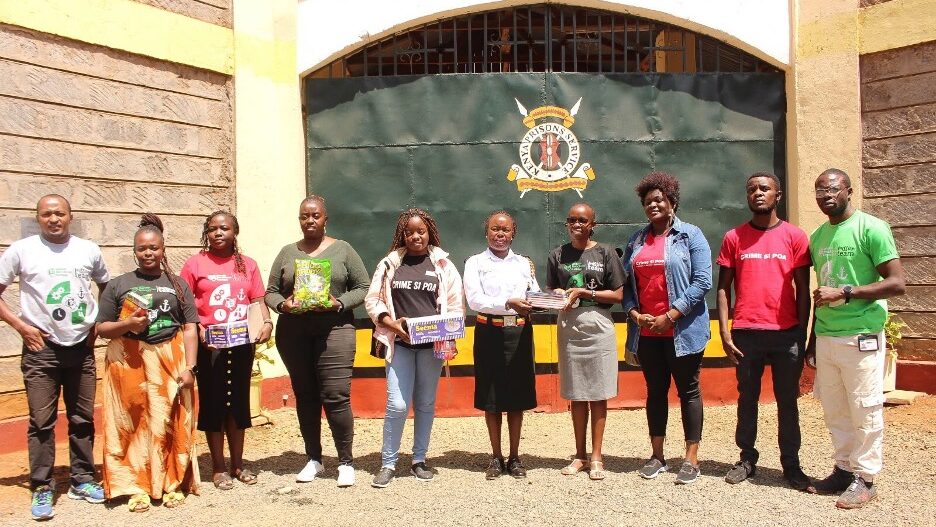
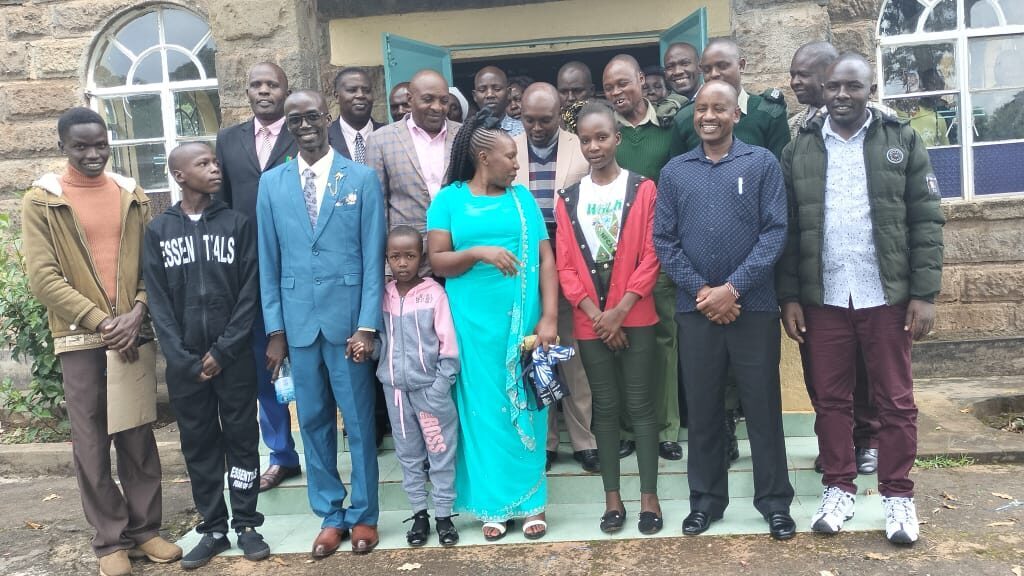
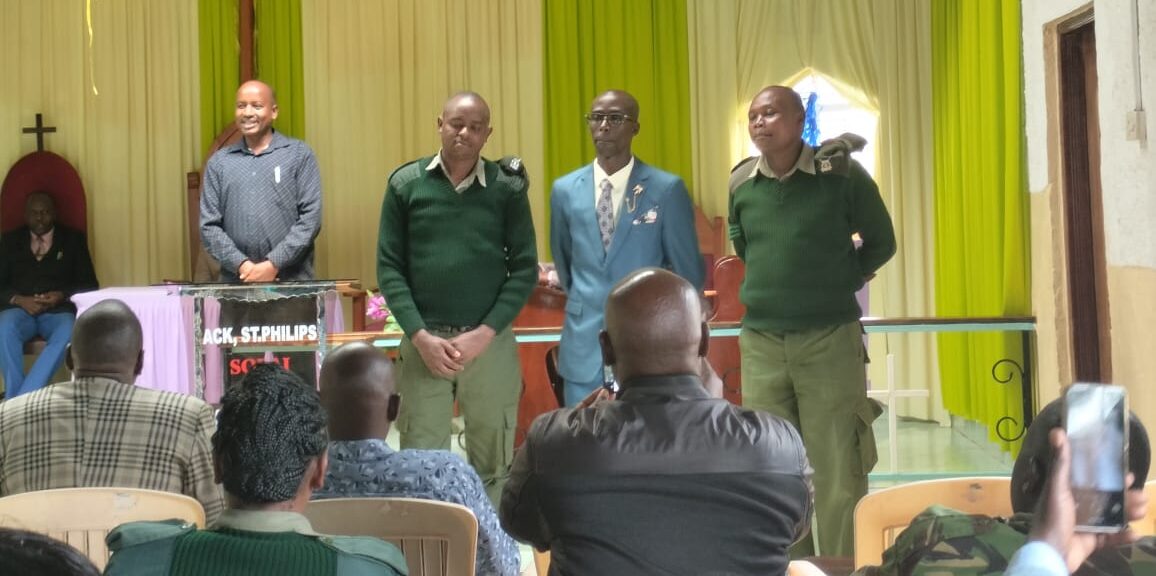
Representatives from Crime Si Poa, Kenya Youth for Christ, and Cooperative Bank join the Senior Prison Officer outside the facility main gate following the handover of supplies.
Recognizing that economic empowerment must go hand-in-hand with emotional and spiritual support, Kenya Youth for Christ shared messages centered on hope, personal renewal, and overcoming past hardships. Their team offered individual mentorship, leading over 20 women to make personal faith commitments and distributing uplifting literature to support their ongoing journey inside. The outreach team also extended thoughtful care to the young children staying with their mothers inside the facility, sharing snacks, treats, and playful activities to bring joy to the children and relief to their mothers.
The leadership at Eldoret Women’s Prison warmly praised the joint initiative, with the Senior Officer in charge highlighting how rare and effective it is to address financial independence alongside spiritual and emotional health. Morale across the facility received a noticeable boost, but more importantly, the women walked away with practical skills to take control of their financial futures. For Crime Si Poa, collaborating with financial institutions and community partners reflects the core of holistic rehabilitation: equipping justice-involved individuals with the dignity, practical tools, and support systems needed to successfully reintegrate into society.
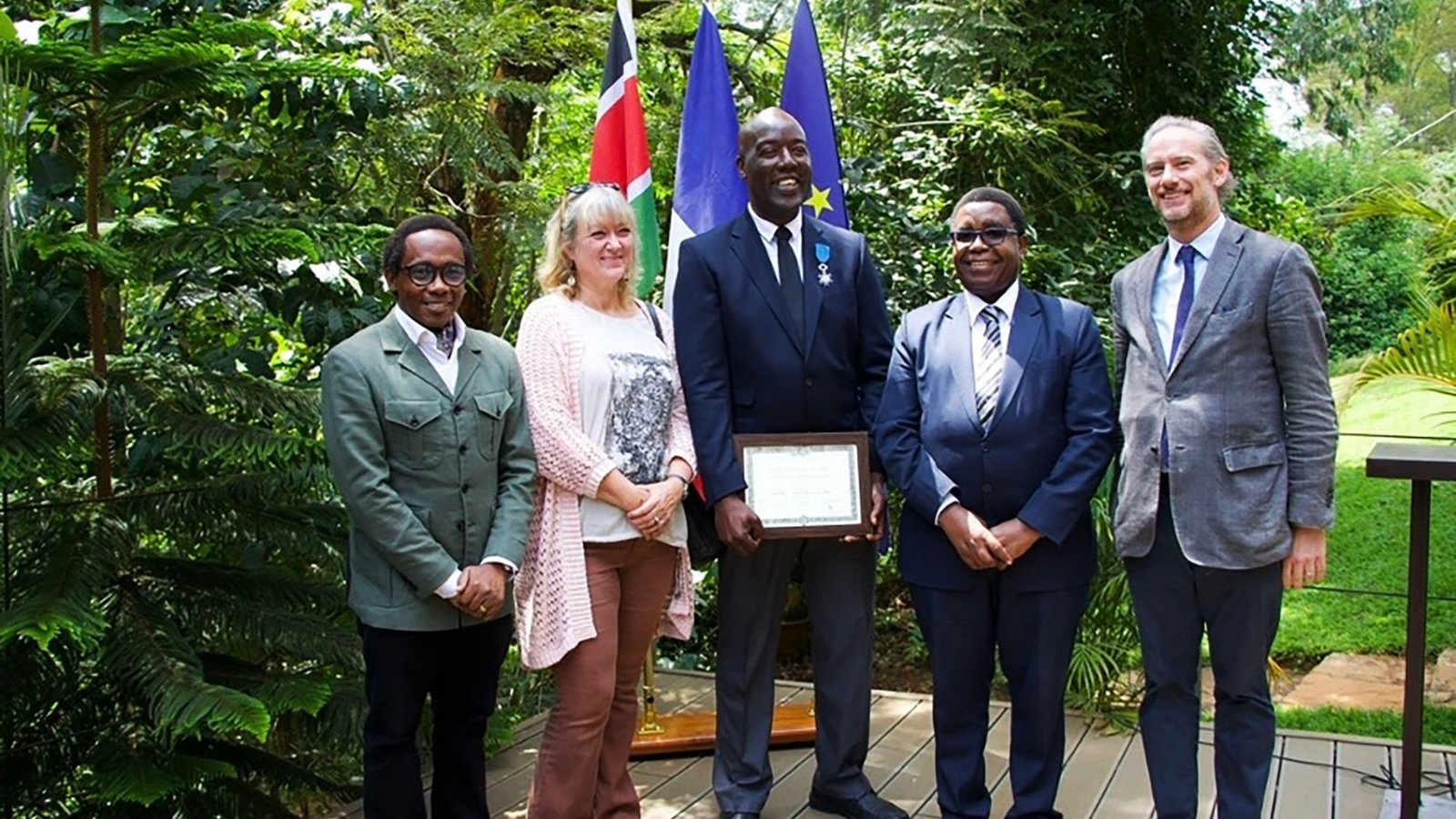
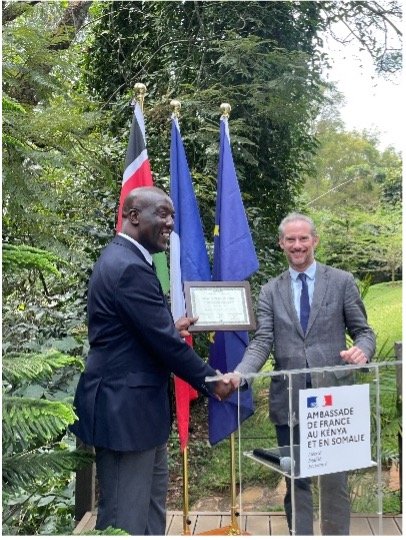
Real and lasting impact is rarely built overnight in the realm of criminal justice reform and international development. It is forged through consistent advocacy, systemic reform, and an unyielding defense of fundamental human rights. At the Residence of the French Ambassador in Nairobi, that long-term commitment received global recognition when Pete Ouko, Founder and Executive Director of Crime Si Poa, was formally conferred with France’s National Order of Merit (Ordre national du Mérite) by H.E. Arnaud Suquet, Ambassador of France to Kenya and Somalia on behalf of President Emmanuel Macron .
The Ordre national du Mérite stands among France’s most distinguished national honors, awarded to individuals worldwide who demonstrate exceptional public service and transformative leadership. For Mr. Ouko, this conferment holds deep, symbolic significance. Having survived 18 years in prison, including 10 years on death row for a wrongful conviction, Pete transformed this extraordinary ordeal into a lifelong crusade for justice. As the first inmate in Kenya to study law behind bars, he founded Crime Si Poa while still on death row to bridge the gap in legal access, stop youth pathways into incarceration, and actively champion the universal abolition of the death penalty.
Through its dedicated Access to Justice and Legal Support Services, Crime Si Poa works relentlessly alongside global partners such as ECPM and the Schooner Foundation to dismantle oppressive legal structures and promote penal reform. By offering pro-bono legal aid and support services, training community and prison paralegals, and educating marginalized populations on their legal and constitutional rights, Crime Si Poa addresses the root socio-economic drivers that lead to wrongful convictions and youth Incarceration
Ambassador Suquet presents the official certificate to Mr. Ouko, celebrating a shared vision between France, Crime Si Poa, and global partners in protecting human rights and advancing equitable access to justice.
During the formal ceremony, Ambassador Suquet commended Crime Si Poa’s pivotal role in pushing the boundary of human rights and legal empowerment in East Africa. The conferment underscored the shared commitment between France and Kenya to uphold human dignity, reform criminal justice systems, and eliminate capital punishment. The event convened diplomats, legislature, civil society and criminal justice sector players, creating a powerful forum to reflect on the future of crime prevention and restorative justice.
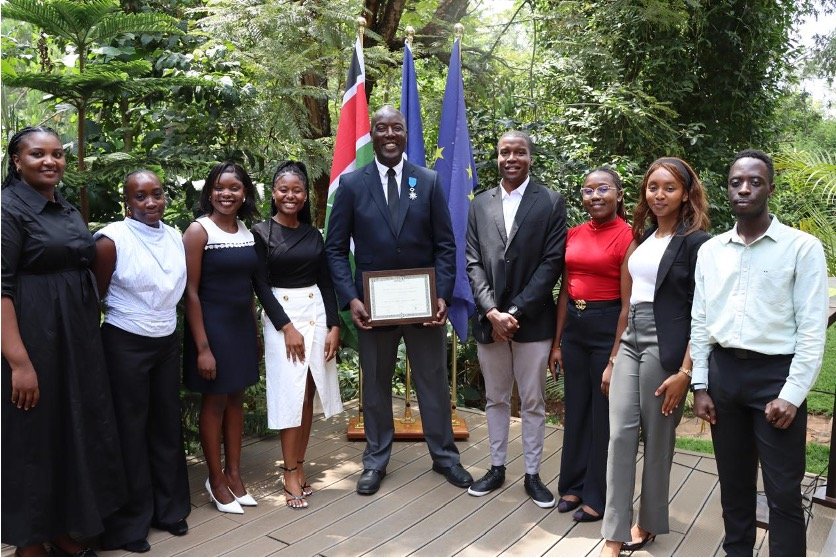
Pete Ouko with members of the Crime Si Poa team at the French Residence, celebrating an institutional milestone in legal advocacy and death penalty reform.
This historic milestone served as an affirmation of the fact that criminal justice reform and fighting systemic injustice requires collective resilience. While one leader’s lived experience and legal vision set the foundation, it is the continued collaboration with international abolitionist organizations, local communities, and dedicated staff that sustains the momentum toward a more humane justice system.
This prestigious recognition is a tribute to the relentless dedication of the entire Crime Si Poa team, whose enduring efforts over the years have driven the organization’s success. Through steadfast commitment to expanding legal aid access, empowering vulnerable communities, and tirelessly advocating against the death penalty, the team has helped reshape Kenya’s legal landscape. Seeing Crime Si Poa’s grassroots mission resonate at the highest global levels serves as a powerful validation of their collective journey, proving that dedicated teamwork and persistent advocacy can spark profound, system-wide change.
What happens when your husband dies and another woman claims to be his second wife yet you were in a monogamous marriage? An important decision comes from the bench at an opportune time surrounding the buzz of South African hit series “The Polygamist” on Netflix, based on Sue Nyathi’s novel, that thematically highlights a situation well known in African homes; a second wife. Polygamy and succession in Kenya have always been points of serious discussion particularly surrounding the contentious provision of section 3(5) of the Law of Succession Act with reference to second wives. In the decision delivered on the 2nd of July 2026, key insights on the position of a second wife in succession can be made.
Succession caused E600 of 2022; In the Matter of the Estate of the late NKM
(Names have been anonymized for the privacy of the parties)
KM, the deceased in this matter passed away in 2021 and the Petitioners apply for letters of administration on the grounds that they are his children. KM was married to the Applicants mother LWM under the tenets of the 1987 Marriage Act in an African Christian Marriage, and subsequently a decree of divorce ended their union in March 2020. The deceased also married one JJK, the objector to this application, under Hehe Customary law in early 2015, and thereafter under Tanzanian civil law in the same year. The objector was under the impression that he had ended the marriage with LWM as he had intimated that to her before proceeding with the marriage. The witnesses called upon by the objector testified to the validity of the marriage between the two, and the objector moved the court to appoint her as an administrator of his estate. The Applicant’s mother, however, contends that the marriage between KM and JJK is illegal, as she was still legally married to him under civil law when he entered into the union with JJK. JJK contends that she is legally his wife, which raises the question of the validity of two wives under marriages civil and their status in succession.
The late KM’s journey began with a registered civil, monogamous union that later stood at the center of the succession dispute.
Kenyan law and practice have recognized that polygamy is allowed, only in instances of customary and Islamic marriages, under the Marriage Act. The existence of two wives under civil marriages is by law an illegality and is classified as bigamy.
By the time the marriage between KM and JJK was entering into force, he was already in a civil monogamous marriage, therefore the union between the two can be construed as null and void in matrimonial proceedings. The Applicant’s main argument lies here. The Objector submits that despite the illegality of the marriage, she remains a wife for succession purposes as espoused in section 3(5) and the court’s novel determination focuses on the interpretation of the same.
Section 3(5) of the Law of Succession Act provides as follows;
“Notwithstanding the provisions of any other written law, a woman married under a system of law which permits polygamy is, where her husband has contracted a previous or subsequent monogamous marriage to another woman, nevertheless a wife for the purposes of this Act, and in particular sections 29 and 40 thereof, and her children are accordingly children within the meaning of this Act.”
The court aptly notes that there was a valid customary marriage followed by a civil marriage to the objector and legally speaking with the subsistence of the first marriage, this marriage is null and void. However, the court notes that the parliamentary construction of the Succession Act differs with the Marriage Act in the extent of nullifying the second marriage where a monogamous union exists.
Unlike the Marriage Act, which explicitly bars the existence of another marriage in a monogamous marriage, the Succession Act recognizes customary marriage. In this case, to the extent of choosing an administrator, the court sees it plausible to admit this objection, as the Act recognizes this, and the deceased had also introduced to all and sundry, including LMW, the objector as his wife.
The court recognizes that the question of matrimonial property remains unanswered and introducing it now would be premature but affirms the objection by JJK and appoints her in conjunction with the Applicants as Administrator of the deceased’s estate.
What does this imply?
For the “Jonasis”, the polygamists;
Even when a marriage is entered into ‘illegally’ i.e. acquiring a second wife through customary marriage without ending the first marriage if it was a civil marriage, the second marriage is ILLEGAL. However, your second wife has rights under section 3(5) Succession Act to succession matters when you die intestate.
Write a will and ensure that you have included all your beneficiaries, dependents, and property in the will and how it should be distributed for the avoidance of doubt when you die.
For the “Joyces”, the first wives under civil marriage
Your husband’s second wife under customary law (ruracios, nyombos) can involve herself in succession matters when your husband dies
Matrimonial property operates outside the provisions of section 3(5), so far. No decision has been made in the involvement of the second wife in the property distribution of matrimonial property
For the “Matipas and Essies”, second wives under customary marriage,
You have a legal insulation of your marriage presumed in succession under Section 3(5), for you and your children
Recognition, testimonial evidence, and any other evidence that can be used to construe a valid customary marriage is important. Payment of dowry, testimonial evidence that you indeed underwent the customary practices, recognition by introduction and quiet enjoyment of second marriage, aid in proving the validity of the marriage for succession only.
If he was married to a first wife through civil marriage, in a church or the Attorney General Office or any other CIVIL marriage recognized in law, your status under the Marriage Act CANNOT be recognized as legal. This decision only deals with succession on a limited scope, not marriage proceedings. Unless he validly divorces his civil wife through the issue of a decree dissolving the marriage, then he is still legally married to the first wife, and she alone can be recognized as his lawful wife.
For the children of both wives, the” Menzis”, the “Sarahs”, the “Mpumes”
In succession matters, and in matters surrounding children and parental responsibility, the best interest of the child prevails.
All children are entitled to recognition in the Succession Act, regardless of the marital status of their mothers, and are entitled to be treated as such in succession matters.
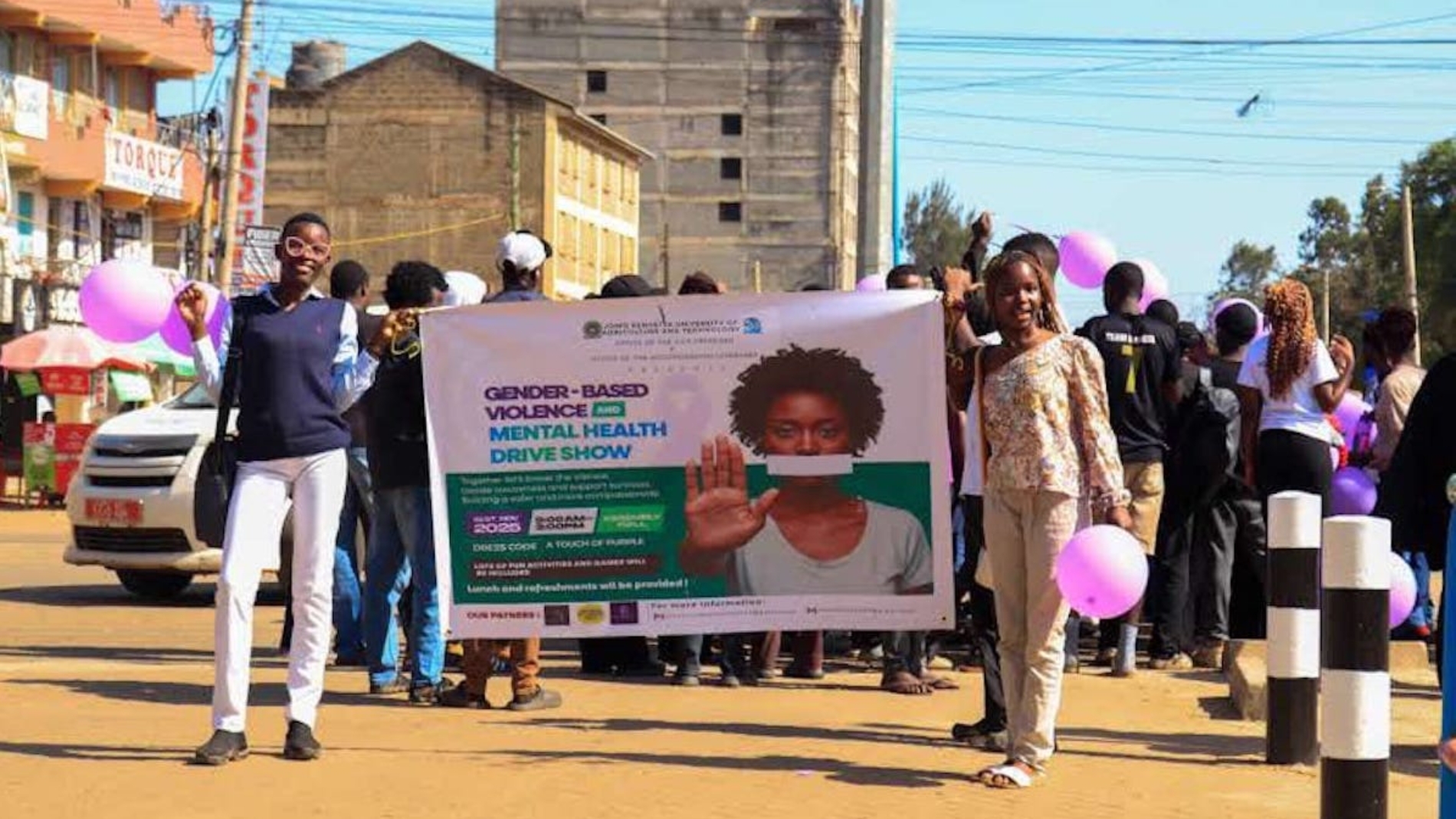
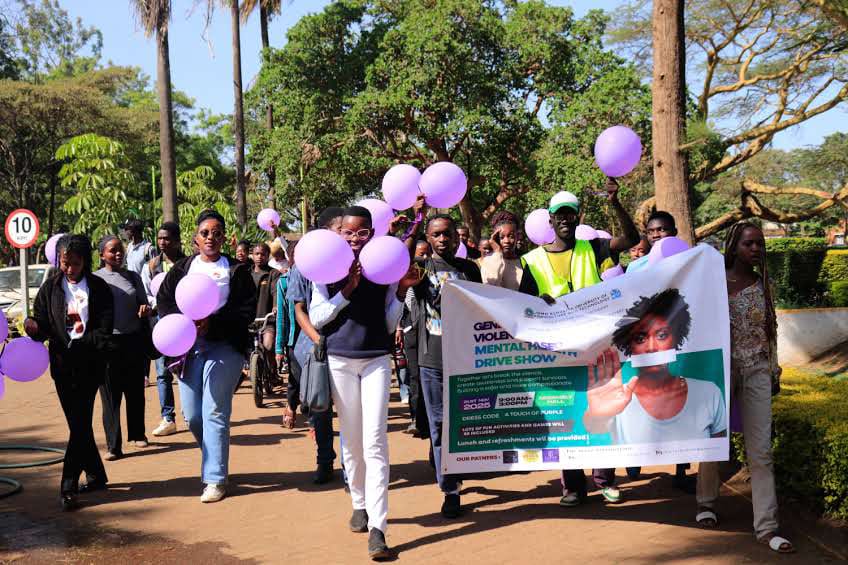
On November 22, 2025, the campus of Jomo Kenyatta University of Agriculture and Technology (JKUAT) came alive with a vibrant Gender-Based Violence and Mental Health drive show. But as the outdoor campaign transitioned into the assembly hall, the energy shifted. The room was filled with students who expected nothing more than a routine awareness lecture; arms were folded, and the space was quiet with a collective indifference. Most of the young men and women filtering into the rows shared a common, unshakeable assumption: Gender-Based Violence (GBV) was strictly a women’s issue.
When our team from the Youth Safety Awareness Initiative (Crime Si Poa) opened the forum by asking, “Who does GBV really affect?” the deeply entrenched stereotypes in the room immediately surfaced. A male student, known on campus as ‘Daktari,’ raised his hand and spoke with a confidence born of societal conditioning. He asserted that men are naturally stronger, fully capable of defending themselves, and that any man who falls victim to domestic or emotional abuse is simply “weak.” His words hung in the air, a stark reminder of the cultural pressures that force male victims into absolute hiding.
To dismantle these rigid beliefs, we stepped away from standard lectures and looked closely at the raw definitions of power, control, and fear. We broke down the distinct faces of violence, emotional erosion, financial manipulation, psychological isolation, and physical harm demonstrating that abuse targets human vulnerability, not a specific gender. To ground the conversation, we backed these realities with legal truths, explaining how the Constitution of Kenya, the Sexual Offences Act, and the Protection Against Domestic Violence Act are designed to shield all persons, without exception.
Empowered with a new understanding that GBV affects everyone, JKUAT students unite in a vibrant march, taking their message of advocacy and mental health awareness from the assembly hall out to the entire campus community.
The true shift in the room happened when we shared real, unvarnished stories of men who are currently living through emotional cruelty, threats, and physical abuse. We spoke of the devastating choice these men make every day to suffer in silence rather than face public ridicule, mockery at police stations, or the crushing stigma of failing to “man up.” As these scenarios unfolded, the casual whispers in the hall faded into an intense, heavy silence. The realization hit home. Behaviors they had spent years laughing at, dismissing, or normalizing were instances of deep trauma.
The vulnerability became contagious. One young man stood up, his voice catching the attention of the entire room: “I truly didn’t know men could be victims of GBV. We always joke about it on campus, but now I see how serious it is.” Another student spoke directly to the systemic barrier, adding, “If a man tries to report abuse, people laugh at him. That is the real reason we keep quiet.” Female students soon joined in, pointing out how these rigid expectations end up isolating women who speak out while completely trapping the men who are hurting in silence.
By the time the forum concluded, the initial skepticism had completely dissolved, replaced by a rare, raw understanding. The students left the hall acknowledging a difficult truth; GBV thrives in the shadows of our silence, our jokes, and our misinformed judgments. Eradicating requires a community where everyone feels safe enough to speak, and safe enough to heal.
My name is Hope. Today, on the 13th of July 2026, I am celebrating my 19th birthday. Looking back at where I was just two years ago, I am sincerely grateful to simply be alive to see this day.
In 2024, at just 17 years old, I was arrested for drug trafficking and sent to Kamae Prison. Back then, I felt utterly lost, branded by society as an outcast, and alienated from the community around me. My life was defined by survival, danger, and despair. Many of my closest friends fell victim to the brutal realities of the streets. Some lost to mob justice, others to gun violence. By all accounts, I could have easily suffered the same fate.
But entering the Prevention Rehabilitation and Reintegration program changed the entire trajectory of my life. The very name of the organization, Crime Si Poa became my daily anchor and motivation. Through their guidance, the harsh truth finally clicked, crime yields no true rewards; its only dividends are imprisonment and premature death. I am alive today by the grace of God and the intervention of this program.
My transformation deepened significantly through the spiritual support of Lavington Vineyard Church. They helped me discover a transformative truth I had never known before that God exists, and that my life has an inherent purpose. This newly found faith gives me the strength to keep moving forward, filling my heart with hope. It has taught me how to pray, how to genuinely love others, and how to build meaningful, healthy friendships.
The structured rehabilitation sessions provided by Crime Si Poa have been instrumental to my personal growth. The comprehensive workshops covering Relationships, Conflict Resolution, Mental Health, Anger Management, Menstrual Health, and Leadership Development provided me with the vital tools I needed to heal, mature, and rebuild my character from the inside out.
Words are entirely inadequate to express the depth of my gratitude to Crime Si Poa and Lavington Vineyard Church. You stepped into my life when I felt like a zero, and you helped me discover the strength to become a hero of my own story. Because I have no material wealth to repay your overwhelming kindness, I offer you the only thing I can: my enduring prayers.
Thank you for playing the most pivotal, beautiful part in restoring my life.
For many young people in Kenya, the months immediately following the completion of Form Four are defined by a quiet, exhausting uncertainty. The sudden shift toward adulthood and independence frequently brings about a deep sense of anxiety, compounded by scarce opportunities and the persistent temptation for idleness. Yet, for 18-year-old Fatuma, this vulnerable transitional season became the foundation for remarkable personal growth.
Driven by a genuine desire to learn and serve, Fatuma began volunteering to support our school mentorship outreach, completely independent of any external incentive or mandate. She would routinely reach out before our scheduled visits, telling me, “Please let me know whenever you’re going for a session.” Without expecting any compensation, she consistently accompanied our team to community sessions, most notably at Nkaimurunya High School, her own former alma mater. Initially, she sat quietly at the back of the classrooms, intently observing our facilitation styles and learning how we engaged the students. Slowly but intentionally, her quiet observation transformed into a willingness to step forward.
Recognizing her steady reliability, I began integrating Fatuma into our broader community engagement initiatives. What started as simple accompaniment quickly evolved into active partnership. Through consistent exposure, she systematically dismantled her own hesitation, sharpening her communication abilities, refining her leadership skills, and developing the emotional intelligence required to connect with diverse groups. With every passing week, her self-assurance grew more visible.
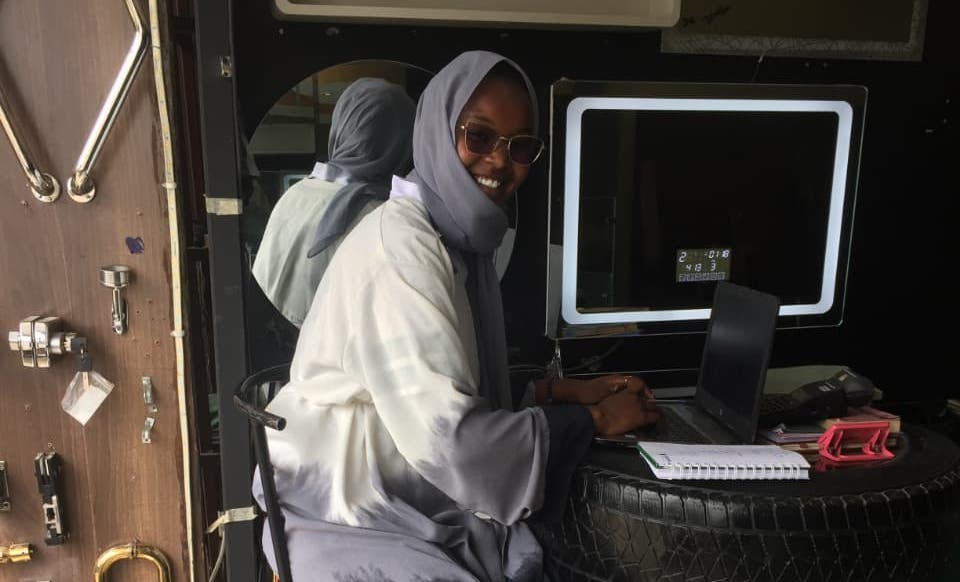
Fatuma managing digital marketing and administrative operations at her new workplace, Hakimi Glass and Leather Shop.
This steady preparation culminated in a significant milestone on June 5, 2026, during a community legal awareness forum hosted at the Kware county offices in Rongai. Intentionally stepping back to create space for her development, I requested Fatuma to take the floor and introduce our organization and the day’s agenda to the gathered public. Standing before the audience, the hesitation of the past months was entirely gone; she spoke with a calm, striking composure born of real experience.
Her professionalism did not go unnoticed. Among the attendees was a local stakeholder who was deeply impressed by Fatuma’s poise and crowd engagement. Following the close of the session, the stakeholder approached us and offered to connect Fatuma with an opening for a marketing position at a nearby business. The very next day, I accompanied Fatuma to the interview, where she handled the panel with the same confidence she had discovered in the field.
She secured the position. On Monday, June 8, 2026, Fatuma officially stepped into her new role as a Digital Marketer and Secretary at the Hakimi Glass and Leather Shop near Maasai Lodge.
Fatuma’s trajectory stands as a tangible reflection of why deliberate youth empowerment remains critical. Often, the barrier between a young person and their potential is simply the absence of an open door, a supportive environment, and an anchor who believes they are capable. When we entrust young people with real responsibility, we do more than build skills, we pave a direct path for self-sufficiency and unexpected opportunities to find them.
The boda boda sector is a cornerstone of the Kenyan economy, providing livelihoods for over one million people. In Embu County, Crime Si Poa (CSP) began engaging riders in Kirimari Ward in August 2025, initially conducting targeted crime-awareness outreach across local picking bays. To ensure these security teachings remain sustainable, our team shifted focus toward empowering the ward’s elected boda boda leadership.
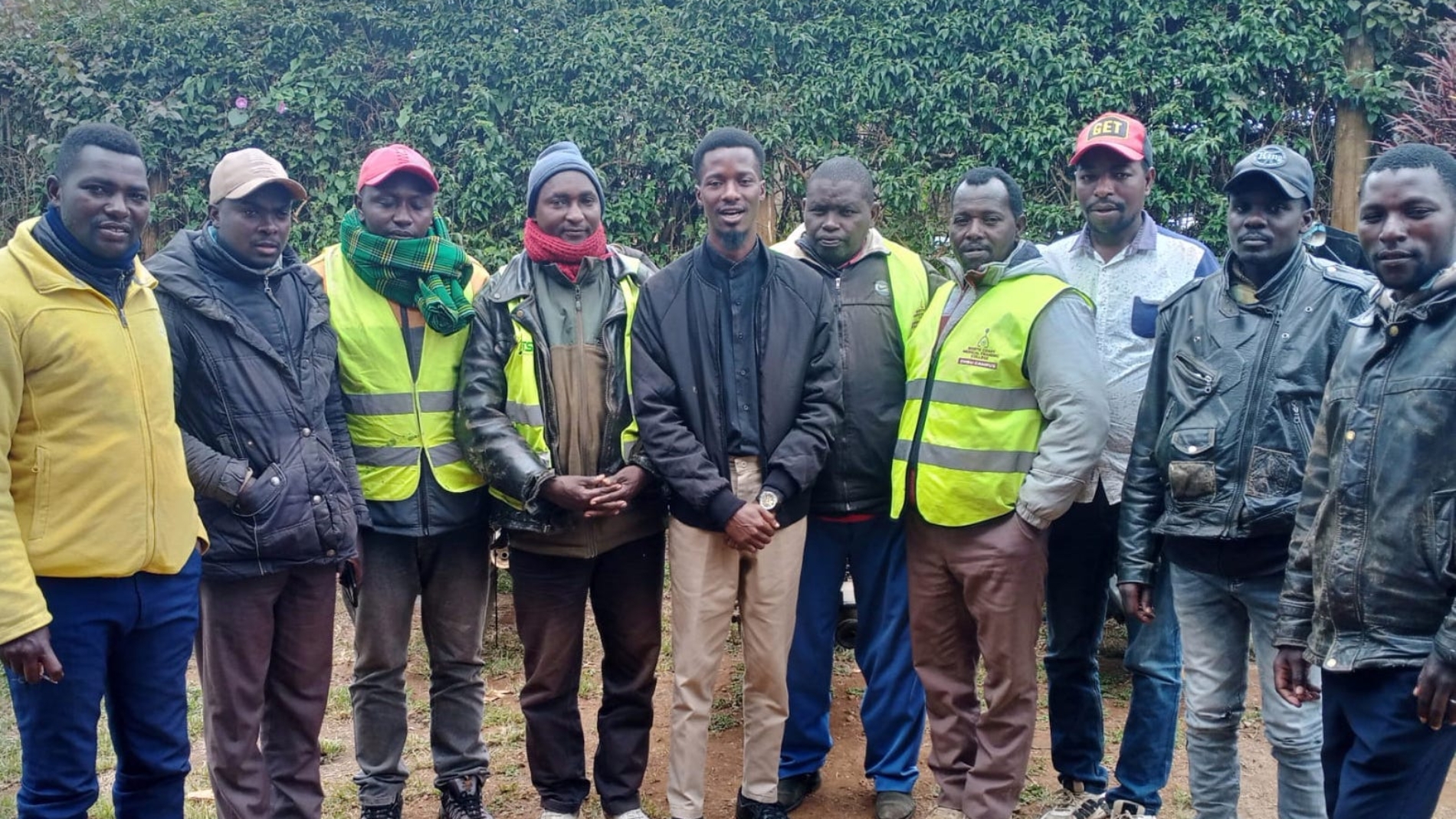
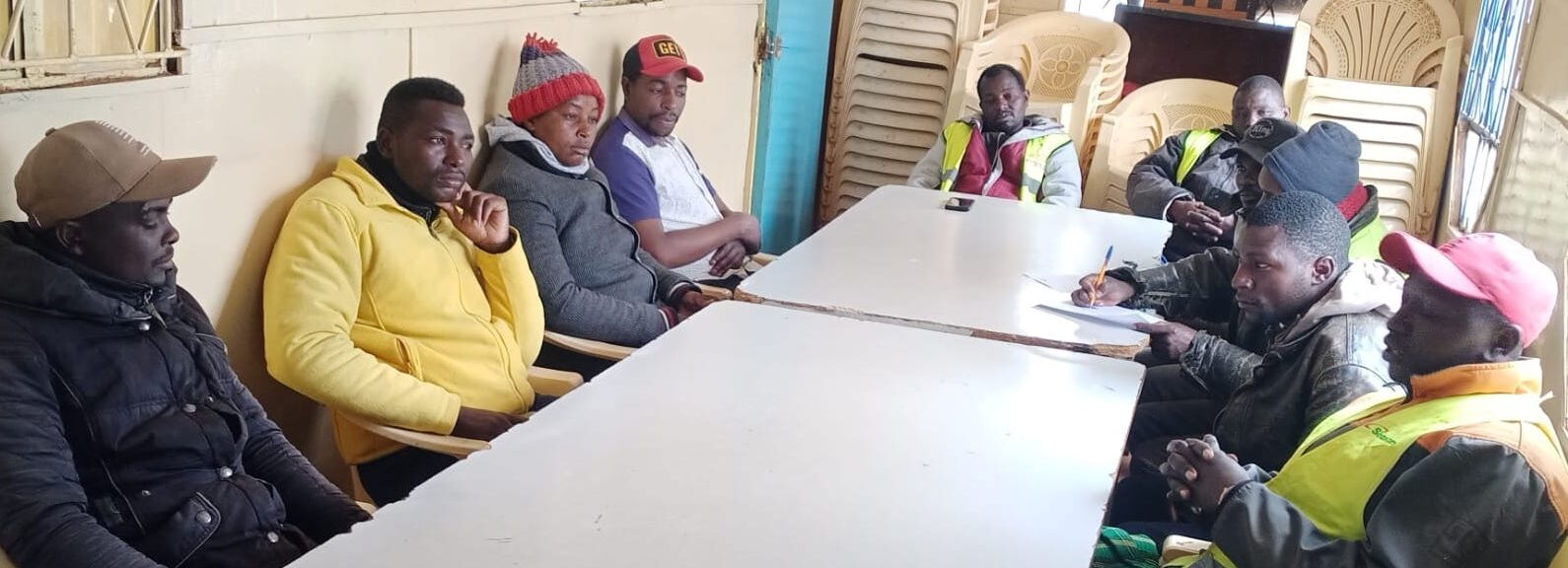
On August 28th, 2025, CSP hosted a specialized leadership training session at the EYAA Youth Centre in Embu Town, attended by ten key leaders. The workshop focused on the principles of community leadership and outlined how these leaders can actively collaborate with CSP to prevent local crime. Beyond theory, the session served as an interactive forum to analyze prevailing criminal trends in their areas, assess safety on the roads, and review the impact of our initial sensitization campaigns.
The insights shared by these leaders demonstrate a remarkable commitment to self-regulation, peace, and public order. Since our first interaction earlier that month, the leadership teams have implemented robust internal policies to counter criminal activity within their ranks.
Mr. Julius Mathaai, the central chairman, explained their strict accountability measures:
“We have established rules stating that if a rider is suspected of criminal involvement, they are immediately reported to the police and suspended. This suspension bars them from operating not just at their specific picking bay, but anywhere within Embu Town under the jurisdiction of the Kirimari Ward Boda Leaders.”
Kirimari Ward boda boda leaders participate in an interactive analysis session, reviewing local criminal trends and discussing how to enforce stricter codes of conduct within their picking bays to restore public order in Embu Town
This preventive approach highlights an invaluable asset in community policing: a strong, trusting relationship between the riders and local law enforcement, which streamlines the reporting process.
In addition to crime prevention, the leaders have enforced strict codes of professional conduct to improve road safety and passenger trust. Mr. Muriithi, the representative for the Rupingazi area, a location previously flagged as a crime hotspot, emphasized their zero-tolerance policy for misconduct:
“We respect our clients and our profession. If a rider is found to be disorderly or intoxicated during working hours, their picking bay leader mandatorily escorts them home Immediately Anyone who resists faces immediate suspension from the bay.”
Our partnership with the Embu boda boda community has yielded measurable shifts in daily operations. Leaders are now actively mentoring younger riders, steering them away from common local offenses like robbery and defilement.
Ultimately, the leaders emphasized that maintaining security and order directly protects their livelihoods. Insecurity from within the sector erodes public trust, making it difficult for honest riders to do business. Moving forward, Crime Si Poa and the Kirimari Ward leadership have committed to sustaining this partnership, with plans to roll out localized refresher sessions at individual picking bays upon request.
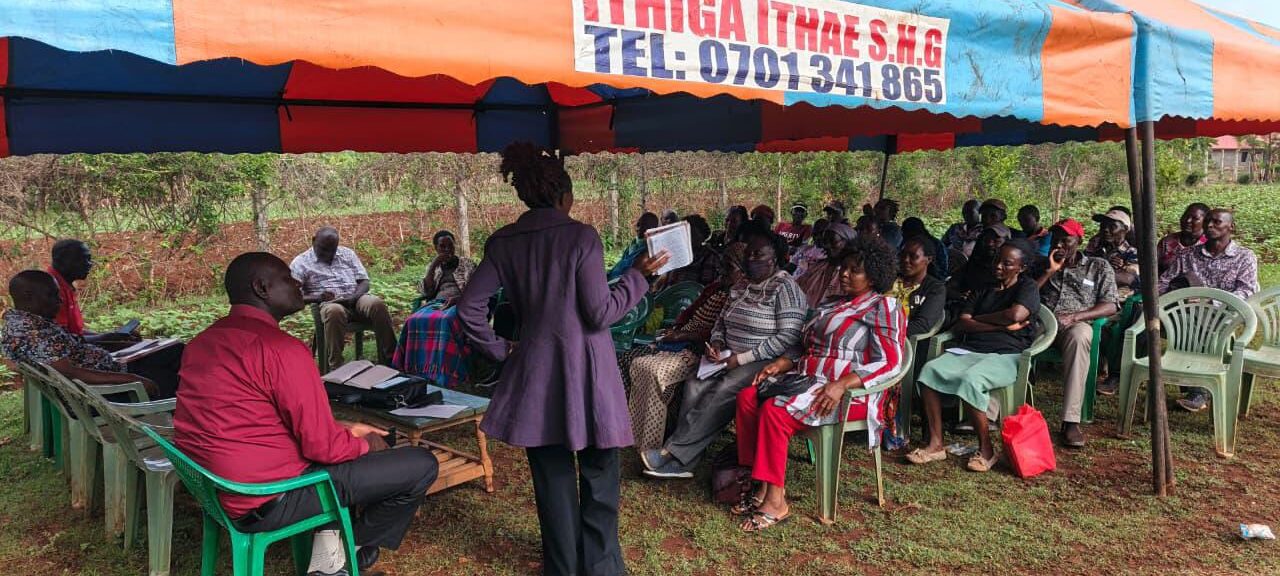
On November 20th, 2025, our team journeyed to the Thumaita West Chief’s Camp in Kirinyaga County. We were heading out to launch a vital Community Engagement Session aimed at crime awareness, a collaborative effort between Crime Si Poa’s Communities Program and the Kirinyaga Patriots CBO (Community-Based Organization). This strategic partnership sparked from a recommendation by the NACADA Central Region office, which pointed the CBO in our direction when they sought ways to mitigate rampant drug and substance abuse in the county. Because the Kirinyaga Patriots have established leadership across every single ward, they provide the perfect, trusted bridge directly into the community.
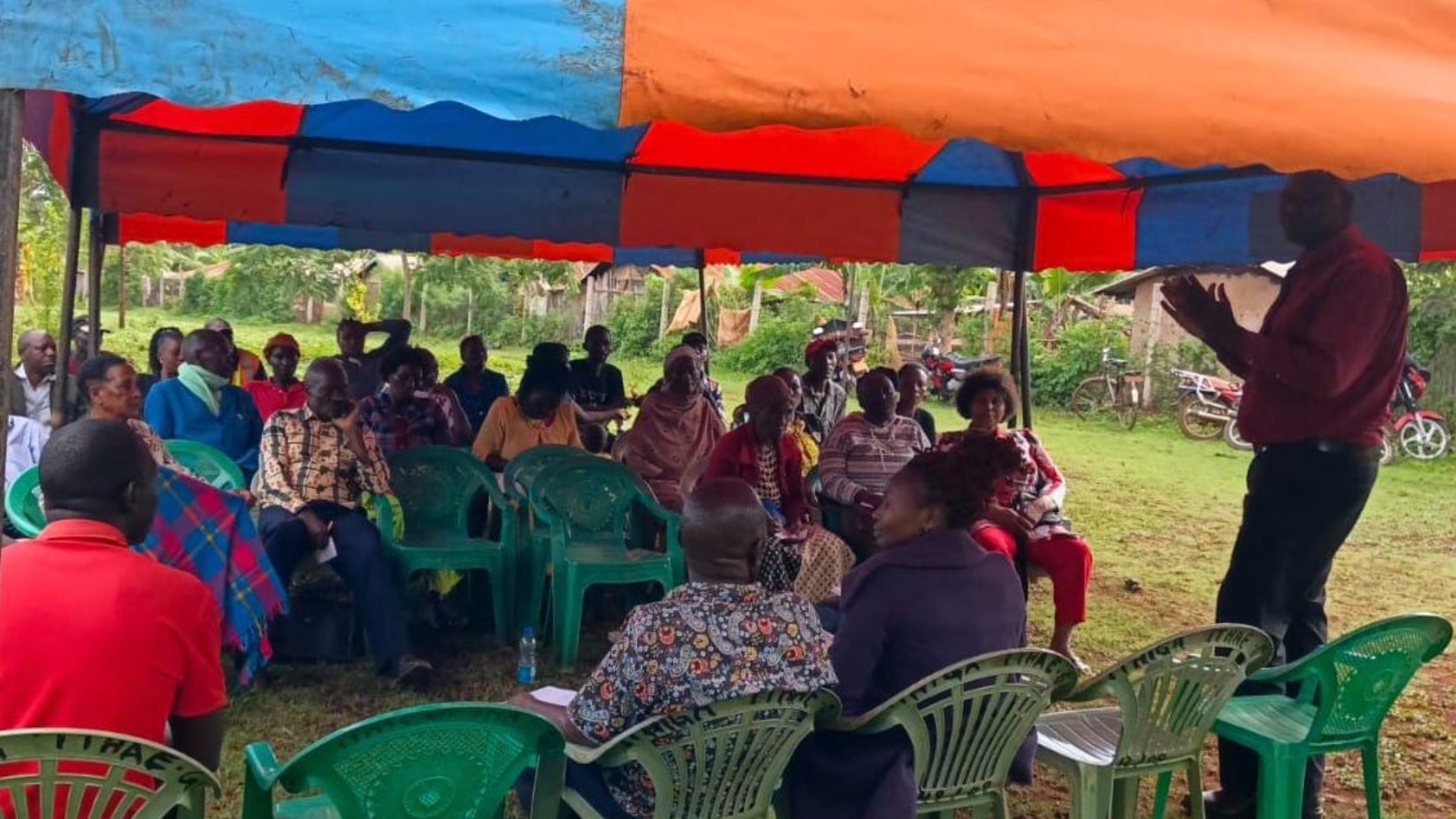
Our collaboration began with intensive leadership training for 18 local CBO leaders. The goal was simple: to equip them to become catalysts for change. Today, these leaders don’t just help organize large-scale awareness campaigns; they actively conduct one-on-one sessions within their neighborhoods. The true power of this grassroots approach was evident at our inaugural session in Thumaita West. Gathering 39 residents for a first-time event was a strong start, made even better by the presence of the local Assistant Chief and Madam Grace, an officer from the County Gender Department
Sharing the early success of the initiative, Mr. Makanga, the CBO Chairman, noted: “Crime Si Poa has heavily boosted our fight against substance abuse. They trained our leaders to combat this vice directly. As a result, our team is on the ground daily. For instance, Mr. Nyaga, our representative for Thumaita West, has been consistently engaging a section of local youths, not only discouraging abuse but guiding them toward responsible living.”
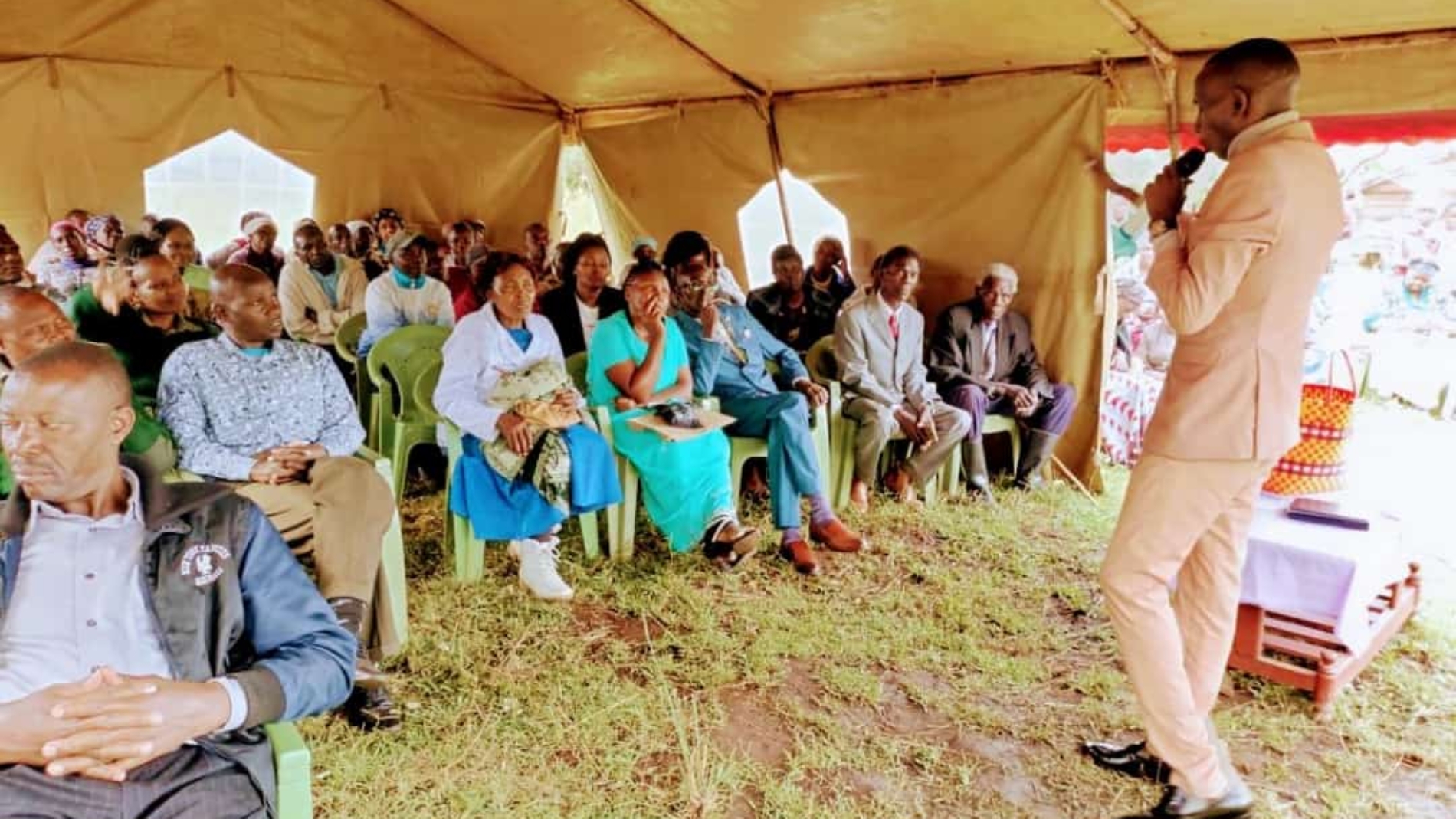
A representative addresses Thumaita West residents on crime awareness and substance abuse prevention during the collaborative outreach session.
Representing Crime Si Poa alongside Central Region Program Officer Yvonne Slesio, I had the opportunity to speak on the devastating consequences of substance abuse on individuals and the wider community. I also urged the crowd to embrace restorative justice by warmly welcoming back reintegrated citizens. A lack of community acceptance remains one of the primary drivers of high recidivism (reoffending) rates.
The local administration offered their full backing. In his address, the Assistant Chief stated: “As a representative of the government, I welcome Crime Si Poa and the CBO to Thumaita West. We are grateful you are supporting government efforts by instilling deterrence through crime awareness. I promise to fully back your activities in this area.”
Madam Grace from the County Gender Department echoed these sentiments: “Your work perfectly aligns with the objectives of the county government. We are highly impressed by your impact and look forward to collaborating further to fight gender-based violence and other crimes across Kirinyaga.”
As the session concluded, it was clear that this outreach is only the beginning of a transformative movement. Fueled by the unwavering commitment of local CBO leaders and strong partnerships with county and administrative offices, the vision of a crime-free society is being driven by the community itself.
For a decade I lived behind the cold bars of Nakuru Main Prison, lost in the shadows of my past each day weighed down by regret and lost opportunities. In the midst of this darkness, a spark of hope ignited through a program conducted by CRIME SI POA that focused on prison and reintegration that offered rehabilitative support through psychoeducation for incarcerated people and prepare one for reintegration to the community during release. This was beyond rehabilitation to me it was a chance to rebuild my life again.
My journey was far from easy, my time in prison had been filled with personal struggles and strained relationships, especially with my wife. But as I participated in the program, through psychoeducation and spiritual sessions, I began to confront the deep-rooted issues that had led me astray, the major ones being emotional coping strategies, Conflict resolution and the power of forgiveness. This was a very slow and crucial part of my personal growth but it was real. My turning point came though a series of counselling sessions which lead to reconciliation with my wife and rebuilding our trust, something I never thought was possible.
Through this program I also discovered my passion for tailoring and through a lot of training and practice I earned a Grade One to Three certification in tailoring, showing my dedication and newfound purpose. On July 29, 2024, I walked out of Nakuru Main Prison a changed man. The prison gates, once a symbol of confinement, now marked the start of a new chapter. My release was not just a personal victory it was shared among my family, the community, and everyone who had supported my transformation. My homecoming was a moment of immense joy and hope. My wife, children, and relatives were overwhelmed with happiness, and the community embraced me with open arms.
Immediately after my release, I set up my tailoring business, which I continue to run to this day. This was made possible through the support of CRIME SI POA, who not only provided me with a sewing machine but also materials to help me kickstart the business. Their support gave me a second chance when I had nothing to my name but hope. On slow days in my tailoring shop I do part time farming and livestock keeping which is doing very well at the moment. Although this reintegration process has not been all even I am really grateful for my family and community members for walking this journey with me.
Because of the person that I am today, I was invited to join the community policing team and now have the honor of chairing youth meetings, platforms where I share my experiences to help prevent others from walking the same path I did. For me, this is the beginning of a new chapter, one built on forgiveness, commitment, and a desire to give back. As I stand surrounded by those who have supported me, I promise to honor their belief in me by continuing to make positive changes in my community. I am forever grateful to CRIME SI POA for believing in me when I had lost all hope, and for helping me become a better version of myself.