
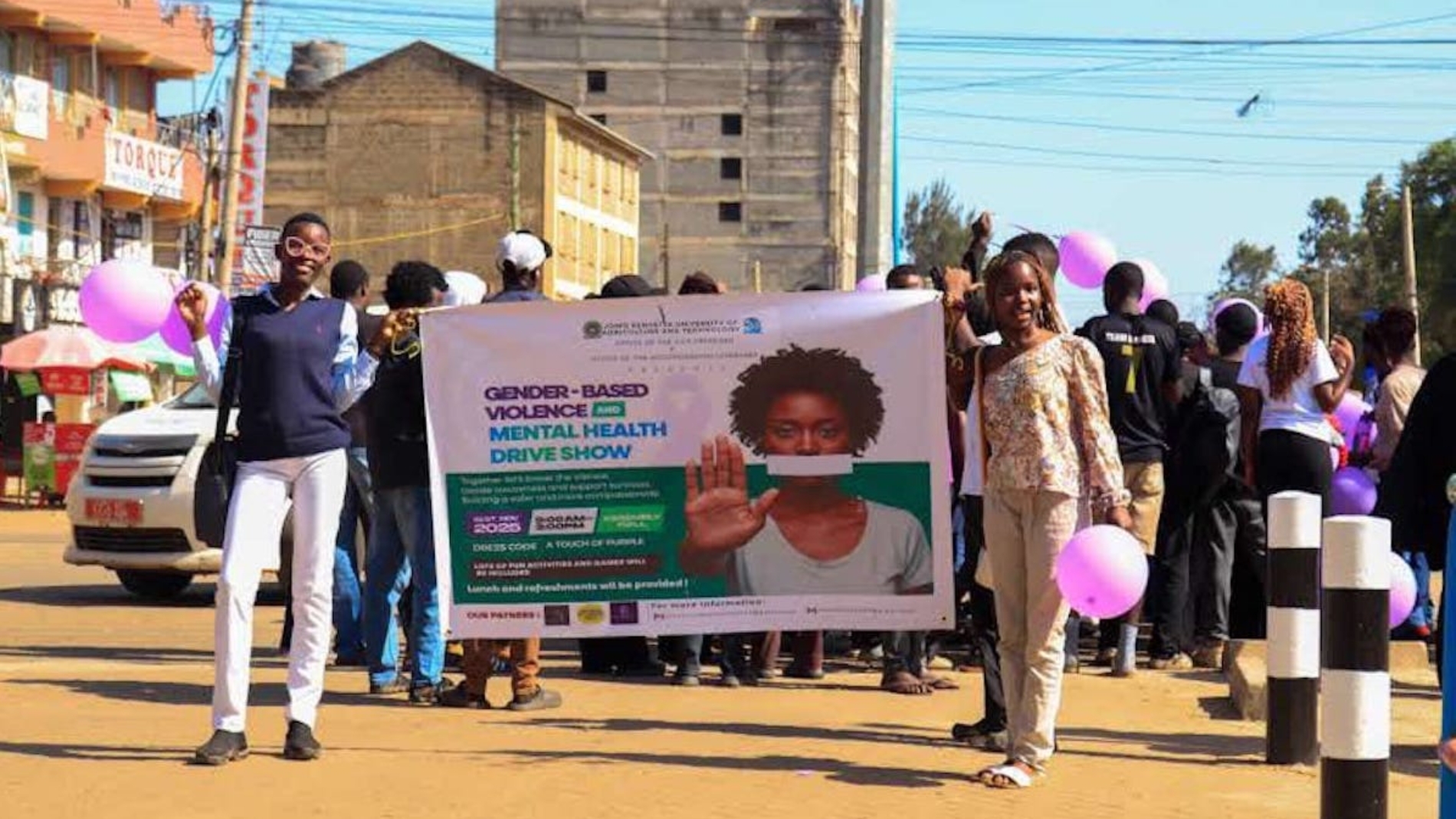
On November 22, 2025, the campus of Jomo Kenyatta University of Agriculture and Technology (JKUAT) came alive with a vibrant Gender-Based Violence and Mental Health drive show. But as the outdoor campaign transitioned into the assembly hall, the energy shifted. The room was filled with students who expected nothing more than a routine awareness lecture; arms were folded, and the space was quiet with a collective indifference. Most of the young men and women filtering into the rows shared a common, unshakeable assumption: Gender-Based Violence (GBV) was strictly a women’s issue.
When our team from the Youth Safety Awareness Initiative (Crime Si Poa) opened the forum by asking, “Who does GBV really affect?” the deeply entrenched stereotypes in the room immediately surfaced. A male student, known on campus as ‘Daktari,’ raised his hand and spoke with a confidence born of societal conditioning. He asserted that men are naturally stronger, fully capable of defending themselves, and that any man who falls victim to domestic or emotional abuse is simply “weak.” His words hung in the air, a stark reminder of the cultural pressures that force male victims into absolute hiding.
To dismantle these rigid beliefs, we stepped away from standard lectures and looked closely at the raw definitions of power, control, and fear. We broke down the distinct faces of violence, emotional erosion, financial manipulation, psychological isolation, and physical harm demonstrating that abuse targets human vulnerability, not a specific gender. To ground the conversation, we backed these realities with legal truths, explaining how the Constitution of Kenya, the Sexual Offences Act, and the Protection Against Domestic Violence Act are designed to shield all persons, without exception.
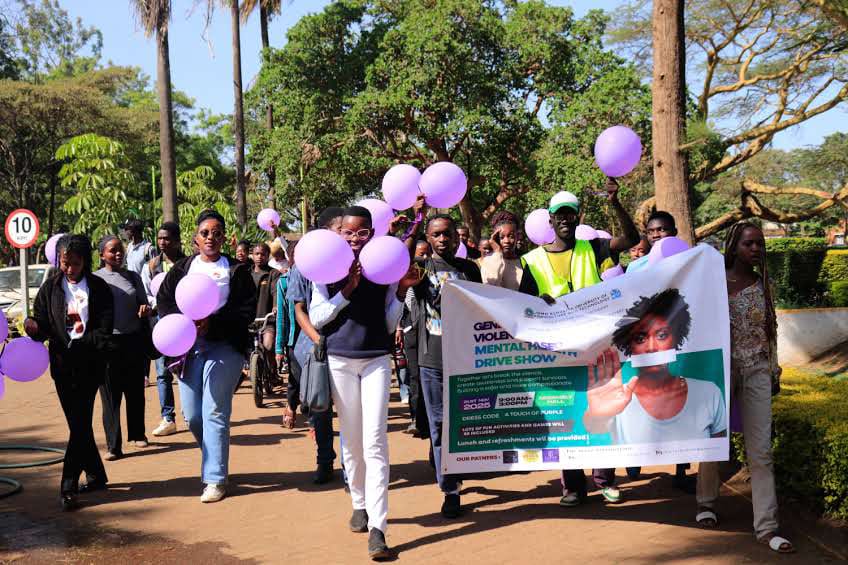
The true shift in the room happened when we shared real, unvarnished stories of men who are currently living through emotional cruelty, threats, and physical abuse. We spoke of the devastating choice these men make every day to suffer in silence rather than face public ridicule, mockery at police stations, or the crushing stigma of failing to “man up.” As these scenarios unfolded, the casual whispers in the hall faded into an intense, heavy silence. The realization hit home. Behaviors they had spent years laughing at, dismissing, or normalizing were instances of deep trauma.
The vulnerability became contagious. One young man stood up, his voice catching the attention of the entire room: “I truly didn’t know men could be victims of GBV. We always joke about it on campus, but now I see how serious it is.” Another student spoke directly to the systemic barrier, adding, “If a man tries to report abuse, people laugh at him. That is the real reason we keep quiet.” Female students soon joined in, pointing out how these rigid expectations end up isolating women who speak out while completely trapping the men who are hurting in silence.
By the time the forum concluded, the initial skepticism had completely dissolved, replaced by a rare, raw understanding. The students left the hall acknowledging a difficult truth; GBV thrives in the shadows of our silence, our jokes, and our misinformed judgments. Eradicating requires a community where everyone feels safe enough to speak, and safe enough to heal.